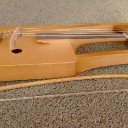
Aeolus dulcimer?
Instruments- discuss specific features, luthiers, instrument problems & questions
I have to say, my dulcimer is a really sweet instrument. I didn't think it was all that rare. Thank you Dusty and Salt. Good advice! :)
I have to say, my dulcimer is a really sweet instrument. I didn't think it was all that rare. Thank you Dusty and Salt. Good advice! :)
How can you tell if an old dulcimer, all diatonic was set up for just intonation or not?
I second the advice @Salt-Springs offers to contact @Guy-Babusek. He plays Aeolus dulcimers and has probably been in contact Dale.
I will see if I can get them and look them over. Thank you very much!
I have been working with one from Wayne Jiang.
The 2 versions of Morning Has Broken that I plan to use together are by Steve Smith and then the flat-picked version by Tull Glazener was what I considered for the interlude. It essentially is the same on a lot of it, but uses the chords played and then broken into arpeggios.
Excellent! Thank you for the tips :)
It has been close to 20 years since Dale and I saw one another. Too many things turned me away from keeping up with my playing, health being a big part of it. But I am back to my dulcimer now :) I am quite happy, but SO out of practice. I am pretty much a beginner again.
Yup, that's what I found out last night, so your way ahead of me. You might Private Message Guy Babusek whose a member here and see if he has any other contact info. I'll keep digging through some old stuff I have around here and see what I can do to help. Guy uses those dulcimers on many of his video's. I think you can catch up with guy at voice-lessons.com.
Yes, but the point of contact is with Cynthia Smith through Aeolus. She taught me to play and did the inlays on my dulcimer. But if I need work on the dulcimer I will be needing to talk to Dale.
Wonderful! This is excellent stuff!
What got me thinking on this and spurred me on to ask was I had been trying playing some of Part B as an intro. (Usually just the last couple of bars).
When I first learned to play I was drilled on the idea of "keeping the left hand in a chord shape". Really good habit that one.
I am with Lois on the point of the books. If finances ever permit, it is a direction I would like to go.
I am curious, which 2 versions of Morning Has Broken are you working with Lois?
Thank you all so very much! :)
Here's a fairly comprehensive (though by no means complete) list of banjo tunings:
http://zeppmusic.com/banjo/aktuning.htm
It includes such tunings as dADAD, aADAD, aDAAD, aDADF#, and others. (in written banjo tunings, the first lower case letter is the short drone string)
The real question however is what you want to do by tuning a banjo to D and A notes. What we think of as "dulcimer tunings" are really just notes. Usually a tuning is used to achieve a specific purpose. It enables us to play a tune more easily, or to play it in a certain way or with certain fingering positions.
You haven't told us what your situation or your goals are, so I'm making assumptions here- As a longtime player of both mtn dulcimers and banjos (and I'm really more a banjo player than dulcimer player), my personal advice would be this- play your dulcimer like a dulcimer. If you want your dulcimer to have a tone like a banjo, get a dulcimer with a banjo head on it. Learn to play and (initially) tune your banjo as a banjo, rather than trying to make it imitate a dulcimer. Banjos are designed to be played most easily like banjos, and learning to play a 5string oldtime banjo is not all that hard, after getting past the first little learning hump of unfamiliar right hand motions. IMHO if you're tuning a banjo like a dulcimer in order to try to make it easier to learn to play (if you're a dulcimer player), you are doing yourself no favors. It might make the first week or two seem easier, but it will make playing the banjo harder and way more limited later on, plus most banjo learning material will then be useless to you as well.
If I've made incorrect assumptions, then forget all this. lolol!
Has anyone ever retuned a banjo into mountain dulcimer tuning?
Probably. I would imagine almost every tuning has been tried by somebody. An instrument with 4/5 tuners [or more] could be tuned [with string research] to just about any tuning using some, or all, of the tuners available. Would it be satisfactory? That would be up to the player. I play a 5 string Blue Lion with only 3 strings installed and it is great.
The name applied to the tuning probably depends on which instrument is being discussed.
I've used a "D" tuning on my banjo and played the melody on one of the D strings using the rest of the strings as drones. It is not ideal, but works.
Ken
"The dulcimer sings a sweet song."
Banjos have five strings, including a short drone string. Oldtime banjos can be tuned to over a hundred different tunings, in many many combinations. Some of those combinations can include strings tuned to D and A and yes also DAd and include other notes on other strings, like gDAda. Keep in mind that our familiar DAd or DAA dulcimer tunings are nothing more than a tonic note with a fifth... and "tonic + 5th" notes appear in the tunings of all kinds of other instruments as well, since it's a common musical interval to use.
Banjos have lots and lots of tunings. The reason people tune banjos in different tunings is usually in order to play certain tunes or certain 'families of tunes' more easily. Since it can be hard to remember so many tunings by naming all the tuning's notes, some banjo tunings are conveniently referred to by a song name associated with it... such as "Sandy River Belle tuning", "Little Birdie tuning", or "Reuben's Train tuning".
Paula -- it can be done, as Robin suggests. Probably better with a banjolele or other short-necked version than a full size instrument.
Paula, I have a Dulcijo-- a little 3-string banjo tuned to DAd. To play out of G, I'll re-tune the middle string to G. I haven't had much chance to play around with it yet hope to in the coming year. Here is a photo:
Dusty, thank you! I've been envying people who can sing a verse or 2, then throw in something that's not just playing the same thing without the words, and then returning to the words. Can't borrow Mastering Variations, but see Amazon has a limited # of copies. DRAT! It's the sort of thing I should have suggested as a Christmas present.
Some of what you suggest has come up in a song I've decided to stick to playing instrumentally only. I found 2 versions of Morning Has Broken. Surprisingly both are in the same key with the 1 I would play as an interlude taking the spot where your hand is already in a chord and arpeggiating (if that's not a real word, it should be) the chord. On 2d thought maybe I'll sing on version 1 & use version 2 as an instrumental break.
O.k. you didn't give the full course or book, but it's a great start with suggestions on proceeding that easily delays my roughly $35 - $70 (buying both O'Rourke's books & including the shipping) for now. When I am ready to move on to more involved discoveries I now know where to go...to a book or 2. The librarian in me, of course, approves the book recommendation,
Has anyone ever retuned a banjo into mountain dulcimer tuning?
Lois, this is a big question, for at essence you are asking how to improvise or take a solo.
First, just some terminology. The term "filler" is usually used for what we do in short spaces, say a few beats in between melody lines or when the melody line sits on a long note.
If you want to play a whole verse doing something different, there are other terms. If you stay close to the melody, it would just be called a "variation," and there are some strategies for creating variations. Aaron O'Rourke teaches this stuff by differentiating between melodic variations, harmonic variations, and rhythmic variations. (He has a book or two entitled "Mastering Variations.")
If you leave the melody behind, you are playing what would have been called many decades ago a "musical interlude," but what we refer to more recently as "a solo." In both cases the chord progression is the same as the verse you are replacing, but you are no longer pretending to play the melody. The way to learn to do this just by feeling or by ear would be to record yourself just playing the chords of the piece and then practicing coming up with alternative melodies. You start by finding the safe notes, which are just the notes of each chord. If you venture to a note that is not a chordal tone, that's OK, so long as it's a passing tone and you get back to a chordal tone soon, probably the first beat of the next measure. As you get a feel for the chord progression, you can perhaps plan how to move from a safe note for one chord to a safe note for the next one.
One of my golden rules of dulcimer playing is to keep your left hand in the shape of a chord at all times. That way you can pluck any note and it will sound OK. In that sense, each of your fingers is already fretting a safe note. Sometimes you can play several filler beats or a section of a solo just by playing arpeggios (the notes of a chord) in a rhythmically interesting way. And sometimes starting with an arpeggio will lead you to more adventurous melodic invention.
A lot of folks who teach this stuff will demonstrate certain scales, such as the 5-note pentatonic scales, as good for improvising. They are, but on the dulcimer we only have 7 notes anyway, so we are already pretty close to the pentatonic scales. And even if you play around with those scales, it is still a good idea to resolve your improvisations on those chord tones, so I would still stress keeping close to those chord positions.
Both Aaron O'Rourke and Stephen Seifert teach this stuff. You might look for some of their online lessons.
Finally in the interests of full disclosure, let me confess that I think in my own playing I am pretty good at filler and often play tunes adding lots of bass notes, extra strums, rhythmic arpeggios, short licks, and some chord substitution, so that each verse sounds a little different than the others. In that sense I am creating variations. But I am not good at all at those longer musical interludes or improvisational solos where you leave the melody behind. When I perform a song with words, I almost always include one or two verses of an instrumental break, and the audience probably thinks I'm improvising, but the truth is that I compose that stuff and practice it over and over again (OCD anyone?), the same way you practice a new song. It's not very inventive either, but it does add a little break from the vocals, and hopefully every now and then I get lucky and find a cool lick here and there.
@Ferrator, first, bridges and intros are different. Bridges are usually part of the composed song. It might be considered the "B" part that contrasts with the main melody. The kind of intro you are talking about is not a formal part of the composed song but a few bars played before the song starts.
One trick for an intro is to play the end of the "B" part of the song. For example, if you were playing "Silently Night" you might begin very slowly playing the part that goes along with the words "Sleep in heavenly peace," then pause for a moment, and then begin "Silent night, holy night . . . ."
You ask a very good question that gets at the difference between merely playing a song and playing an interpretation of a song, which would include intros, filler, perhaps a musical interlude (what we used to call the "solo") as well as an ending.
Because the intro & the ending can easily come from the piece, they aren't as hard to come up with something. My puzzlement is always that "filler" between sections or verses. Suggestions?
You have tried the phone numbers and email on his website I presume.
You chose RVW's Fantasia on Greensleeves as an example of what you would like to do. A fantasia often involves playing with a "theme" or phrase of music in several different styles. It tends to be highly improvisational. You really need to be very familiar with and comfortable with the tune before you start improvising on it. One of my favorites is Seven Variations on God Save the King.
Ken
"The dulcimer sings a sweet song."
@Ferrator, first, bridges and intros are different. Bridges are usually part of the composed song. It might be considered the "B" part that contrasts with the main melody. The kind of intro you are talking about is not a formal part of the composed song but a few bars played before the song starts.
One trick for an intro is to play the end of the "B" part of the song. For example, if you were playing "Silently Night" you might begin very slowly playing the part that goes along with the words "Sleep in heavenly peace," then pause for a moment, and then begin "Silent night, holy night . . . ."
You ask a very good question that gets at the difference between merely playing a song and playing an interpretation of a song, which would include intros, filler, perhaps a musical interlude (what we used to call the "solo") as well as an ending.
Yes I do. But trying to get hold of Dale is proving as easy as looking for teeth on a chicken. Mine was made in 1988 so it is "aging in and mellowing" very well.
Is there an easy way to come up with a bridge or an intro?
For example, I have one of the Jessica Comeau books. Included is Scarborough Gaire. Now it is blatantly obvious that the version in the book and the one she plays are quite different. Granted, she is a pro and therefore, makes the big bucks. But is there a rule of thumb for doing that sort of thing?
Right, put in 3 zillion years of practice and all...
Ralph Vaughn Williams did something pretty incredible with Greensleeves:
Ideas?
Yes.............top of the line......you have one?
I tried tying flies once. Damn things just will NOT hold still. It is as calming and Zen as herding cats.
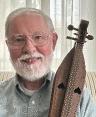
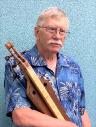
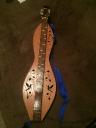
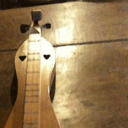
Has anyone heard of Aeolus dulcimers made by Dale E. Foye?
Congratulations on the Christmas gift from your mother-In-Law and wife. It's always good to see a dulcimer going to a good home. The best part is you only have to give it some attention on a regular basis to fully enjoy it. No feeding, watering, daily walks, or cleaning of the litter box is necessary.
That's great news, sounds like a win-win for all. We'd love to see pictures of it, if you get the chance. You're going to love having that McSpadden!
@staylor -- sounds like Santa was good to you. If you have any questions. just ask. We enjoy helping folks on their dulcimer journeys.
Great to hear that you have the McSpadden. Enjoy the dulcimer. I'm sure you will have fun playing it.
Ken
"The dulcimer sings a sweet song."
@staylor Well, happy new year & happy strumming! So good how things worked out. :)
Thank you all again for your responses. Santa--in the form of lovely wife and mother-in-law--genuinely surprised me by buying this beautiful dulcimer on the sly for $200. That was a bargain for us, and our friends were happy for it to go to someone who'll actually play it without the hassle of shipping.
I look forward to spending some time here and learning more. Happy new year!
I had the great honor and pleasure of doing a minor repair on one of Merv's personal instruments for him, a year or so before he passed away. He was a great builder and promoter of chord-melody in DAAS as well as the 1-3-5 tuning...
My name is Tom Campbell. I first played a dulcimer in summer of 1983. Merv and Jo Rowley introduced me to the mountain dulcimer. I met them at the Rockford Folk Festival in Rockford, Illinois. Merv and Jo were like parents to me. Merv was a master luthier and Jo a very talented artist. I love Merv's dulcimers. I look forward to getting know some new folks who share the same love that I have for the dulcimer and old time music.
Merry Christmas
RB
Thanks for that Dusty.
Strumelia, the black lyre in the picture a few posts back is the Nordic Lyre and on looking at it it does have similarities to a crwth .... attached is a picture of the crwth.
Playing chords is really no mystery. The vast majority of chords you will need are triads (three-note chords). If the three required notes are available on three different strings (so they can be played simultaneously) and within reach of the thumb and fingers, then the chord can be played on the mountain dulcimer. If a complete triad is not playable on the mountain dulcimer, it is normally because one or more notes of the triad cannot be played due to an unreachable finger stretch or due to that particular note's unavailability in the chosen tuning.
Since the mountain dulcimer is not usually chromatically fretted, it is often necessary to retune the dulcimer to make certain notes accessible. Both D-A-A tuning and D-A-d tuning (with a 6 1/2 fret) optimize the availability of notes required to play in the key of "D" major. In D-A-d tuning, the added 6 1/2 fret enables the musician to play the C# note that otherwise would not be available on the melody or middle string.
@Hobbyhorse, those look like quite elegant instruments you are making. Nice job!